
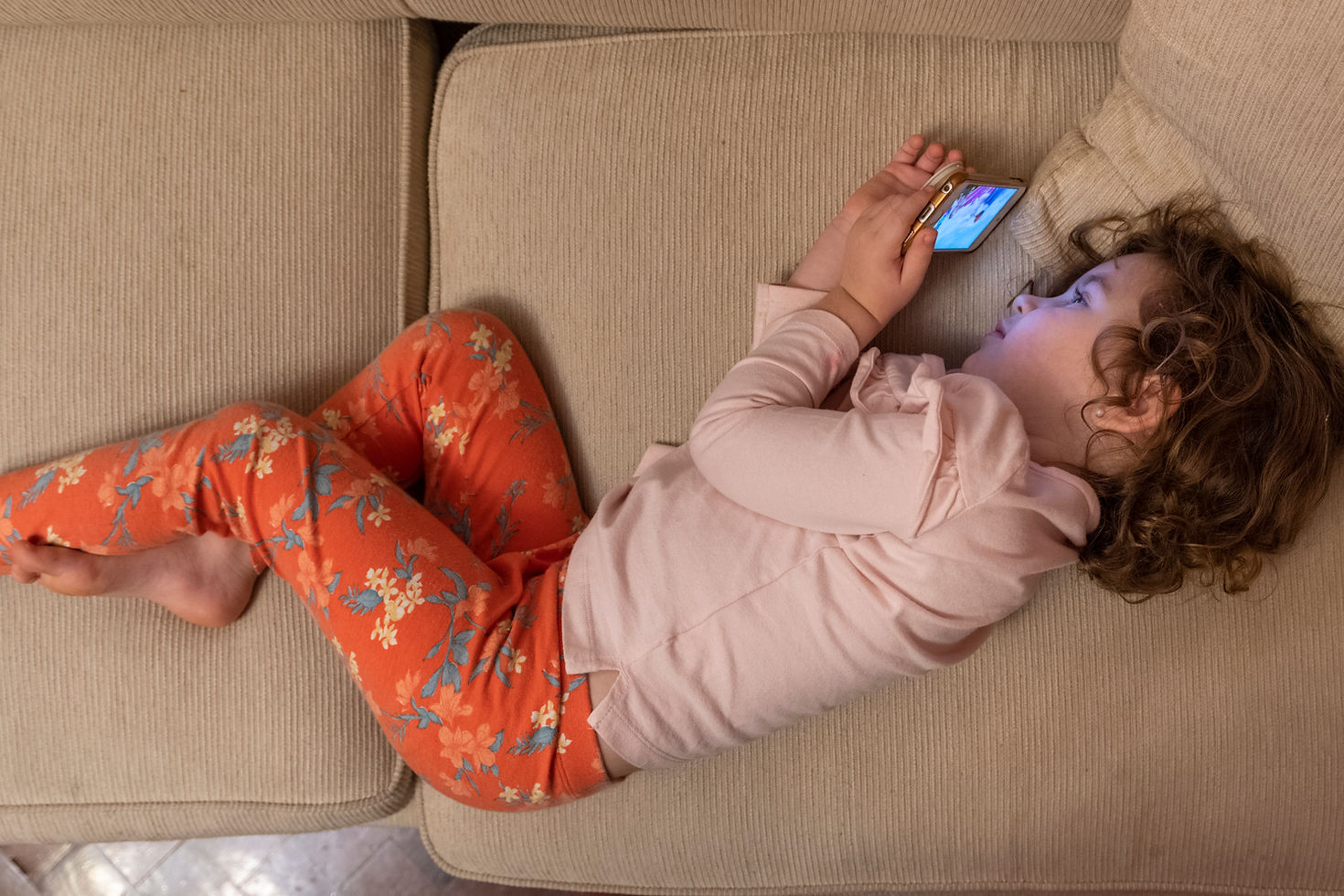
Why I’m Actually Glad The UK Wants To Ban Social Media For Under 16s
- Inked Badger Studio

- Jun 17
- 8 min read
The UK’s proposed social media ban for under 16s has kicked off exactly the sort of reaction you’d expect from people online. Some people think it’s brilliant. Some people think it’s government overreach, and some people think kids will find a way around it anyway, so what’s the point in banning it?
I get all of those arguments. I really do, but speaking purely from my own experiences, growing up in those online spaces, I’m actually glad we’re finally having this conversation.
I had a little phone when I was around 10 years old. I didn’t have internet access on that phone, but I had an iPad at home, access to computers, and plenty of opportunities to get online. Like most kids, I thought it was amazing, I felt very grown up and I felt really independent. I felt like I was getting access to this massive world that adults couldn’t control.
At the time, I thought I was solucky. Looking back, well… I don’t think I was. Because as a child, I saw things that children should never have to see.
Violent videos.
Sexual content.
Graphic images.
Stories and discussions that my brain wasn’t mature enough to process.
The weird thing is, when you’re a kid, you don’t necessarily realise it’s harmful. You don’t think, “This will affect me.” You think, “Wow, this is amazing”. You think you’re cool because you’ve seen something shocking, that you’re basically an adult because you’ve got unrestricted access to the internet. It’s only years later that you realise how much information you were absorbing before you were even ready. And that’s the bit I think people forget.
The internet isn’t just silly cat videos and funny memes a bout life anymore. Children aren’t logging on to a cute little website to play Flash games after school. (GoGirlGames was my jam). They’re stepping into the same internet that adults use. An internet filled with violence, misinformation, pornography, harassment, scams, body image issues, eating disorder content, extremist content and every other corner of humanity that can be uploaded to a screen in seconds.
That’s a lot for an adult, Never mind a 12-year-old.
There is another side to this that I don’t think gets talked about enough. When people discuss children on social media, they often focus on screen time, attention spans, or whether kids spend too long scrolling. What gets mentioned less is the fact that putting children online also gives strangers access to them. Looking back, that’s the part that genuinely scares me.
As a child, I was messaged by grown men online. At the time, I didn’t think much of it. In fact, I probably thought it was cool. I thought it meant I was mature. I thought I was being treated like an adult, but when you’re young, you don’t always recognise red flags for what they are.
You don’t realise that an adult wanting private conversations with a child isn’t normal. You don’t understand the risks because you’re a child. That’s literally the point. Now that I’m older, I look back and think, what the actual fuck? Why was that normal? Why was I in spaces where complete strangers could contact me? Why did we just accept that children should be sharing the same online spaces as adults?
Social media has made the world smaller in a lot of ways, but it’s also removed barriers that once existed between children and people they should never be interacting with. And while most people online are perfectly normal, it only takes one person with bad intentions. That’s reality.
Kids Deserve To Be Kids
One of the biggest arguments against a ban is that children will miss out. But miss out on what exactly???
Endless scrolling?
Comparing themselves to influencers?
Watching strangers argue?
Seeing content specifically designed to keep them glued to a screen for as long as possible??
The average teenager already spends hours online every day. Government research published this month found that children aged 13 to 14 spend around four hours online per day, not including gaming. It also found that 97% of UK teenagers aged 13 to 15 own a mobile phone. (GOV.UK)
Think about that for just a second. Four hours a day. Every day. That’s a huge chunk of childhood. I probably spend the same amount (for work & personal) and I feel like it’s getting too much.
I know people will immediately jump to saying “well we survived it.” Did we? Because when I look around, I see adults who are still struggling with body image issues that started online. Adults who measure their worth through likes and comments. Adults who compare their lives to heavily edited content. Adults who feel pressure to constantly perform online.
If grown adults struggle with that, why do we expect children to handle it perfectly?
The Comparison Trap Starts Earlier Than Ever
When I was younger, if someone had nicer clothes than me, I probably only saw them outside of school, in the evenings or on weekends.
Now kids can compare themselves to thousands of people before they sit down for breakfast. They can compare their bodies;
Their homes.
Their holidays.
Their birthdays.
Their friendships.
Their appearance.
Their popularity.
Every single day.
And it never ever stops. There is always someone richer;
Always someone prettier.
Always someone more successful.
Always someone with a seemingly perfect life.
Always someone who has what you don’t.
We know social media isn’t real. Adults know that it’s performative. Kids often don’t, or at least not fully. How can we expect children to build confidence when they’re constantly being shown impossible standards?
The Stuff Kids See That We Pretend They Don’t
Let’s be real honest. A lot of adults massively underestimate what children are seeing online.
We’ve all seen horrific videos spread across platforms.
We’ve all seen shocking content appear in feeds.
We’ve all seen things go viral that absolutely shouldn’t.
Even with existing protections, children continue to be exposed to harmful content online, including violence, hate speech, self-harm material and pornography. The UK introduced new online safety measures in 2025 specifically because of concerns around children accessing this type of content. (GOV.UK)
I know because I saw plenty of things I shouldn’t have.
And I wasn’t actively searching for them. They just appeared on my feeds or they were shared by someone, Posted somewhere, Sent around as a joke. One click just becomes another click, and then a endless loop of constant consumption of content.
Children are naturally curious, I know I was and that’s not a flaw. That’s just being a child. But curiosity mixed with unlimited internet access, where they can see absolutely EVERYTHING, can take kids to places they simply aren’t ready for.
Are Kids Losing Other Hobbies?
Whenever people talk about social media, someone will usually say: “Well, what else are they supposed to do?”
And, to be honest I think that’s the wrong question to ask. Maybe we should be asking what social media has replaced.
When I was younger, if I was bored, I’d pick up a book, go outside, play games with friends, draw, make up random stories, or find literally anything to entertain myself. (I also made hand puppets from white A4 paper?? They were not good)
Boredom wasn’t the enemy. It was where the creativity happened. Now children have instant entertainment available every second of the day. (Have you ever tried to talk to a child while they are on a device?? Nightmare.) And while that’s convenient, it might be coming at a cost.
According to the National Literacy Trust’s 2025 survey, only 32.7% of children aged 8 to 18 said they enjoy reading in their free time. That’s the lowest level recorded in the twenty years they’ve been tracking it. Even more worrying, only 18.7% said they read daily in their free time. (National Literacy Trust)
Think about that for a second. Only around one in three children actually enjoy reading for pleasure. (I find this so sad 💔). Reading doesn’t just improve literacy. It helps concentration, imagination, empathy and critical thinking. Yet we’re raising a generation that is increasingly competing against algorithms designed by billion-pound companies whose entire goal is to keep people scrolling for as long as possible.
I’m not saying social media is solely responsible. But Life has definitely changed.
But I do wonder what would happen if children spent less time chasing the next video and more time discovering hobbies they genuinely love.
Would more children read?
Would more children create?
Would more children spend time outdoors?
Would more children learn how to sit with their own thoughts without immediately reaching for a screen?
I don’t know. But I think it’s a question worth asking.
Will The Ban Stop Everything?
No. I really don’t think so. Kids are so smart. Some are going to use older siblings’ phones or use family devices. Some will 100% find workarounds. That’s just a fact of the ban.
In fact, studies looking at social media age restrictions show that many young people actively try to get around them. (arXiv)
But here’s the thing. A safety measure doesn’t have to be perfect to be worthwhile. Just think:
Seatbelts don’t stop every injury, but we still wear them.
Locks don’t stop every burglary, We still use them.
Age restrictions don’t stop every child getting access. But they create barriers. And these barriers matter so much. If even one child avoids seeing something traumatic because of those barriers, isn’t that worth something?
What About The Good Side Of Social Media?
There absolutely is one. Social media can help people find communities, and Learn new skills, to stay connected and to feel less alone. And critics of the ban have rightly pointed out that some young people, particularly disabled children and vulnerable groups, rely heavily on online communities for support and friendship. (The Guardian)
That is such a valid concern, and It’s so important to talk about it. But I don’t think acknowledging those benefits means we should ignore the risks. The conversation shouldn’t be “All social media is evil.” The conversation should be whether unrestricted access to social media is appropriate for children. For me, they’re two very different things.
A Question Worth Asking
If social media was invented tomorrow, knowing everything we know now, would we happily hand it to a 10-year-old?
Would we look at the algorithms. The addictive scrolling. The violent content. The trolling. The scams. The misinformation. The body image pressures. The adult conversations.
And say:
“Yeah that’s great, crack on.” I’m not sure we would. And I think that’s why this debate matters.
My Final Thoughts
I don’t think this is about punishing children. I think
It’s about asking whether we’ve normalised something that maybe shouldn’t be normal. Personally, I wish I’d had less access when I was younger. I wish there were things I hadn’t seen. I wish there were conversations I hadn’t been part of. I wish I’d spent a little more time being a kid, reading a book or making art. So while I know this ban won’t be perfect, and I know people will disagree with me, I genuinely hope it makes a difference. Because childhood is already short enough. Maybe it’s okay if we stop rushing kids through it.
What Do You Think?
Would a social media ban have helped you when you were younger?
Or do you think education and parental controls are a better solution?
I’d love to hear your thoughts because this is one of those topics where there probably isn’t a perfect answer.


Comments